
The Science Behind Healthy Skin: What Really Works
Healthy skin isn’t just about looking good in the mirror—it’s about understanding what’s happening beneath the surface. With endless products, trends, and advice floating around, it’s easy to get lost. Ever wondered why some routines work wonders while others do absolutely nothing? The answer lies in science, not hype. When you understand how your skin actually functions, everything becomes clearer—and much simpler.
Let’s cut through the noise. Whether you’re following a trending routine or trusting a Clean beauty skincare brand, what truly matters is how ingredients interact with your skin’s biology. Think of your skin like a smart system—it responds, adapts, and protects. When you work with it instead of against it, that’s when real results begin to show.
Understanding Your Skin: The Basics That Matter
Before diving into products and routines, you need to know what your skin actually is. Sounds obvious, right? But most people skip this step.
Your skin has three main layers:
1. Epidermis (Outer Layer)
Acts as a barrier
Protects against bacteria, pollution, and UV rays
2. Dermis (Middle Layer)
Contains collagen and elastin
Gives skin strength and elasticity
3. Hypodermis (Deep Layer)
Stores fat
Provides insulation and cushioning
Think of these layers like a house. The epidermis is your walls, the dermis is your structure, and the hypodermis is your foundation. If one weakens, everything else suffers.
The Skin Barrier: Your First Line of Defense
Your skin barrier is like a security guard—it decides what gets in and what stays out.
Why it matters:
Keeps moisture locked in
Blocks harmful irritants
Maintains overall skin balance
What damages it?
Over-cleansing
Harsh products
Excessive exfoliation
Environmental stress
When your barrier is damaged, your skin becomes dry, irritated, and prone to breakouts. Ever used a new product and suddenly your skin freaked out? That’s your barrier waving a red flag.
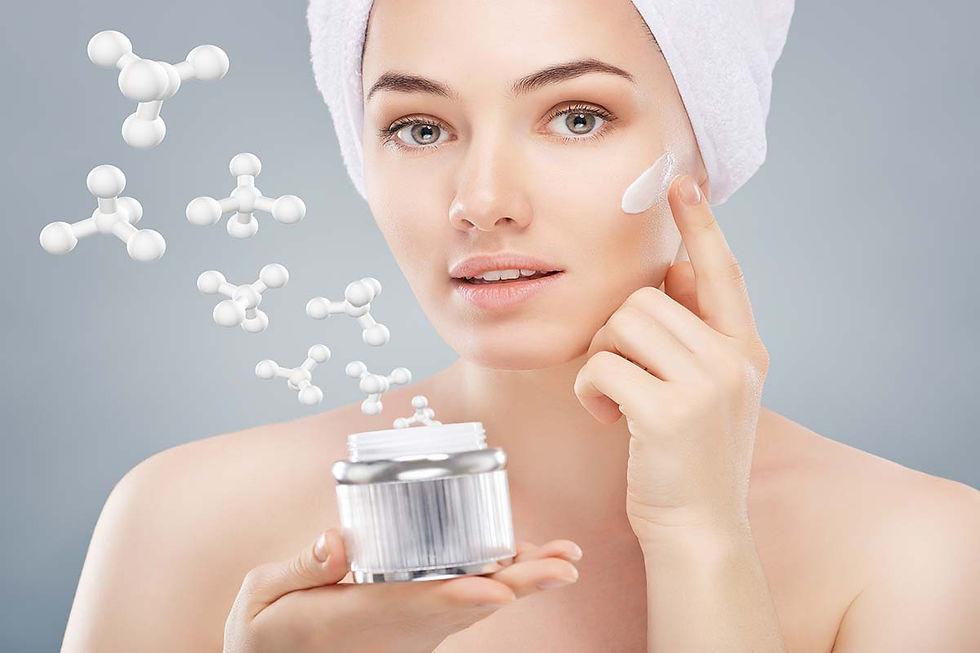
Hydration vs Moisturization: Not the Same Thing
This is where many people get confused. Hydration and moisturization are not interchangeable.
Hydration
Adds water to the skin
Makes skin look plump and fresh
Moisturization
Locks in that hydration
Prevents water loss
Simple analogy:
Hydration is like watering a plant. Moisturizing is like sealing the soil so the water doesn’t evaporate.
Key ingredients to know:
Hyaluronic acid – attracts water
Glycerin – boosts hydration
Ceramides – strengthen the barrier
Shea butter – locks in moisture
Collagen: The Secret Behind Firm Skin
Let’s talk about collagen—the protein everyone seems obsessed with.
What it does:
Keeps skin firm and elastic
Prevents sagging and wrinkles
The catch?
Your body naturally produces less collagen as you age.
What helps maintain it:
Vitamin C
Sunscreen
Retinoids
Think of collagen like the scaffolding of a building. When it weakens, the structure starts to collapse.
The Role of Sunscreen: Science-Backed Protection
If there’s one thing science agrees on, it’s this: sunscreen is non-negotiable.
Why UV rays are harmful:
Break down collagen
Cause pigmentation
Accelerate aging
Types of UV rays:
UVA – causes aging
UVB – causes sunburn
Best practices:
Use SPF 30 or higher
Apply daily, even indoors
Reapply every few hours outdoors
Skipping sunscreen is like leaving your front door wide open during a storm.
Active Ingredients That Actually Work
Let’s get into the good stuff—the ingredients that are backed by real science.
1. Retinoids (Vitamin A)
What they do:
Speed up cell turnover
Reduce fine lines
Improve texture
Things to know:
Start slowly (they can irritate)
Use at night
Always pair with sunscreen
2. Vitamin C
Benefits:
Brightens skin
Fights free radicals
Boosts collagen production
It’s like a shield against environmental damage.
3. Niacinamide
Why it’s popular:
Reduces redness
Controls oil
Strengthens the barrier
4. Salicylic Acid (BHA)
Best for:
Acne-prone skin
Deep pore cleaning
5. Alpha Hydroxy Acids (AHAs)
What they do:
Exfoliate the surface
Improve skin tone
Smooth texture
The Truth About Exfoliation
Exfoliation is great—until it’s not.
Benefits:
Removes dead skin cells
Boosts glow
Helps products absorb better
But here’s the catch:
Too much exfoliation damages your skin barrier.
Golden rule:
1–2 times per week is enough
Overdoing it is like sanding wood too aggressively—you’ll ruin the surface.
Diet and Skin: You Are What You Eat
Your skin reflects what’s happening inside your body.
Foods that support healthy skin:
Fruits and vegetables (rich in antioxidants)
Healthy fats (like nuts and seeds)
Water (hydration is key)
Foods to limit:
Excess sugar
Processed foods
Dairy (for some people)
Think of your diet as fuel. Bad fuel = poor performance.
Sleep and Stress: The Hidden Factors
Ever noticed how your skin looks dull after a bad night’s sleep? That’s not a coincidence.
Why sleep matters:
Skin repairs itself at night
Boosts collagen production
Stress effects:
Triggers breakouts
Increases inflammation
Simple fixes:
Aim for 7–8 hours of sleep
Practice stress management (even a short walk helps)
Building a Science-Based Routine
Now let’s put it all together.
Morning Routine:
Gentle cleanser
Vitamin C serum
Moisturizer
Sunscreen
Night Routine:
Cleanser
Retinoid or treatment
Moisturizer
Common Myths Debunked
Let’s clear up some confusion.
Myth 1: More products = better results
Nope. Simplicity wins.
Myth 2: Natural always means safe
Not always. Poison ivy is natural too.
Myth 3: Oily skin doesn’t need moisturizer
Wrong. Skipping it can make oil production worse.
How Long Does It Take to See Results?
Patience is everything.
Typical timelines:
Hydration: a few days
Acne improvement: 2–4 weeks
Anti-aging effects: 8–12 weeks
Consistency beats everything. Think marathon, not sprint.
Final Thoughts: Science Over Hype
At the end of the day, healthy skin isn’t about chasing trends—it’s about understanding what works and why. When you follow science-backed principles, everything becomes simpler, clearer, and more effective.
So next time you’re tempted by a viral product, ask yourself: does it actually work, or is it just clever marketing?
Stick to the basics. Trust the science. And most importantly—listen to your skin.
Comments